
The Fed Raised Interest Rates: What Does It Mean for Home Buyers, Sellers and Our Local Real Estate Market?
The Fed Raised Interest Rates: What Does It Mean for Home Buyers, Sellers and Our Local Real Estate Market?
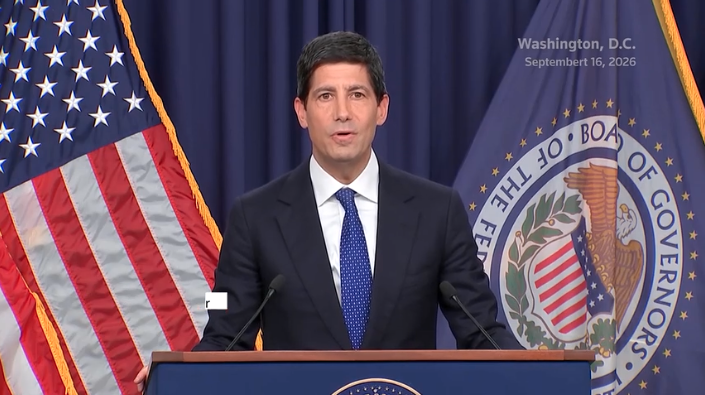
On September 16, 2026, the Federal Reserve raised its benchmark federal funds rate by 0.25 percentage points, bringing its target range to 3.75%–4.00%. It was the Fed's first rate increase in more than three years and came as policymakers continue working to bring persistent inflation under control.
Naturally, one of the first questions we're hearing is:
"What does this mean for mortgage rates and real estate?"
The short answer is: it matters, but it's more complicated than the headline makes it sound.
First: The Fed Does Not Directly Set Mortgage Rates
This is probably the most important misconception to clear up.
When the Federal Reserve says it "raised interest rates," it is referring to the federal funds rate, a short-term rate used within the banking system.
A 0.25% Fed increase does not mean every 30-year mortgage automatically increases by 0.25%.
Mortgage rates tend to follow longer-term economic forces, particularly Treasury yields, along with expectations surrounding inflation, economic growth and future monetary policy.
That means mortgage rates can sometimes rise before a Fed decision because financial markets were already anticipating it. They can even move in the opposite direction from the federal funds rate under certain circumstances.
As of September 17, Freddie Mac reports an average 6.95% rate for a 30-year fixed mortgage.
So What Happens Next?
Here's where we have to be careful.
We don't have a crystal ball and neither does anyone else.
Will rates go higher?
Will the Fed ultimately reverse course and lower rates?
Will home prices continue rising?
Will higher rates significantly reduce buyer demand?
Will buyers adjust and continue purchasing anyway?
Those answers will depend on inflation, employment, economic growth, Treasury yields, consumer confidence, housing inventory and a number of other factors.
Most Federal Reserve policymakers currently project at least one additional rate increase during 2026, but projections can change as new economic data becomes available.
So rather than trying to predict six or twelve months from now, we think it's more useful to look at what the housing market is actually telling us today.
What We're Seeing in Livingston County
The August 2026 Realcomp numbers show considerable activity in Livingston County.
Residential new listings increased 18.2% compared with August 2025, while pending sales increased 16.2% and closed sales jumped 30.5%. The median sale price increased from $408,950 to $460,000, while sellers received an average of approximately 99.4% of their list price.
The year-to-date picture is encouraging as well. Through August, new listings are up 8.1%, pending sales are up 8.0%, and closed sales are up 4.3% compared with the same period in 2025. Median prices are up 3.8%, while average market time actually declined from 33 days to 29 days.
In other words, at least through August, Livingston County was not showing signs of a housing market that had stopped moving.
Oakland County Tells a Slightly Different Story
Oakland County demonstrates why real estate is always local.
Residential inventory in August was up 21.5% compared with last year, and months of supply increased from 2.3 months to 2.8 months. That means buyers generally have more homes to choose from than they did a year ago.
August pending sales were down 6.4% and closed sales were down 5.6% year over year. However, the broader year-to-date numbers remain slightly positive: pending sales are up 2.4% and closed sales are up 1.7% through August.
Meanwhile, the median residential price is still increasing - $421,500 in August 2026 compared with $413,500 one year earlier.
That's a market that appears to be giving buyers somewhat more breathing room without, at least so far, producing a broad decline in prices.
Now Add Higher Interest Rates to the Equation
And this is where things could change.
The local statistics above cover activity through August 2026, meaning they largely reflect contracts, buying decisions and financing conditions that occurred before this week's Fed announcement.
Higher borrowing costs can reduce purchasing power.
A buyer who qualified comfortably for a particular payment at one mortgage rate may need to reduce their target price if mortgage rates rise. Some buyers may delay purchasing altogether. Others may remain in the market but become more price-conscious or negotiate more aggressively.
For sellers, that means pricing becomes increasingly important.
When buyers are paying more to borrow money, there may be less tolerance for an overpriced home. Properties that are properly priced, well prepared and effectively marketed can still attract attention while homes priced based on what a neighbor sold for during a different market may have a harder time.
At the same time, increased inventory can create opportunities for buyers who spent several years competing against multiple offers with very little negotiating leverage.
What Is the Market Saying Today?
Interestingly, one day after the Fed's announcement, U.S. financial markets are trading higher, with major stock indexes up as investors continue processing the Fed decision, falling oil prices and changing Treasury yields.
That doesn't mean markets will stay higher tomorrow or even through the end of today.
It illustrates something important:
Markets react to far more than one headline.
Interest rates, inflation, oil prices, jobs reports, economic growth, consumer behavior and investor expectations are all moving simultaneously.
Housing works much the same way.
What Should Buyers Do?
Higher rates don't necessarily mean someone shouldn't buy. They mean buyers should understand their numbers before making a decision.
The purchase price is only one piece of affordability. Mortgage rate, down payment, taxes, insurance and other costs determine the actual monthly payment.
Buyers may also find opportunities in a market with more inventory and fewer bidding wars than existed during some of the most competitive recent years.
The question shouldn't simply be "Are rates high?"
It should be:
"Does buying make financial and personal sense for me?"
What Should Sellers Do?
For sellers, the days of simply putting nearly any price on a home and expecting buyers to compete for it are not universal.
The latest data still show strong selling activity in parts of our market, but rising inventory and affordability pressures mean strategy matters.
Pricing, presentation, marketing and understanding the competition become even more important when buyers have additional options.
Don't Try to Time the Perfect Market
There will always be a reason to wait.
People waited because prices were rising too quickly.
They waited because inventory was too low.
They waited for interest rates to fall.
They waited for prices to fall.
And now some may wait because the Federal Reserve raised rates.
The reality is that there is no perfect market.
What matters is understanding the market that exists today and making decisions based on your finances, your timeline and your goals.
The most recent local statistics show that buyers and sellers are still making moves throughout Livingston and Oakland counties. The Fed's latest rate increase introduces another factor that we'll be watching closely and the coming weeks and months will tell us how significantly it affects local buyer demand, inventory and pricing.
We don't have a crystal ball. But we do have real-time market information, local data and the ability to adjust as the market changes.
That's ultimately what good real estate guidance is about.
Categories
Recent Posts


